Cirauqui is perched on a conical hill and seems to go uphill in every direction. The camino enters through a medieval archway and climbs steeply to the Iglesia de San Román at the top, where the plaza and a small albergue provide a resting point. Don't forget to get your credencial stamped under the archway.
Like Mañeru, the village has impressive coats of arms carved into stone facades. The Iglesia de San Román preserves a 2,000-year-old Roman milestone inside — evidence of how old these routes really are. The views from the top of the village across the surrounding farmland and toward the Sierra del Perdón are excellent.
A bar operates on the main street. The descent from Cirauqui is one of the highlights of this stretch — the path drops down through a stone archway and onto an ancient Roman road, still paved with original stones in places, before crossing a Roman bridge over a small stream.
The Day of the Cross is September 14, with celebrations running from September 13 to 19.
Excavations in the area have uncovered traces of Roman settlement. The Roman road leaving the village — its original paving stones visible for a stretch — and the Roman bridge below confirm that this hilltop was a waypoint long before the Camino existed. The village name is Basque in origin.
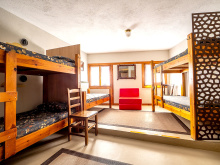
Accommodation in Cirauqui.
| Albergue de Peregrinos Maralotx de Cirauqui 17-22€ 25 Booking.com |
|
Comments