Logroño
Camino Frances
Logroño is the capital of La Rioja and the first major city after Pamplona. You enter across the Puente de Piedra over the Río Ebro — a crossing that defined the city's fortunes for centuries.
The old quarter is compact and walkable. The Concatedral de Santa María de la Redonda (it shares cathedral status with Santo Domingo de la Calzada) has twin Baroque towers and houses a small painting attributed to Michelangelo — a Crucifixion, easy to miss in a side chapel. The Iglesia de San Bartolomé has the finest Romanesque doorway in the city. The Iglesia de Santiago el Real, the only one directly on the camino route, has an imposing equestrian Santiago Matamoros over the main entrance.
But the real attraction is Calle Laurel. This narrow pedestrianized street and its offshoots pack in upward of 50 tiny bars, each with its own signature pincho. The tradition is to go from bar to bar — one pincho and one glass of Rioja at each stop. Bar Soriano does one thing (grilled mushrooms with garlic oil and a prawn on top) and does it perfectly. The crawl typically starts around 8 PM and can go very late. If your albergue has a curfew, plan accordingly.
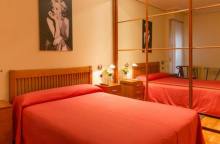
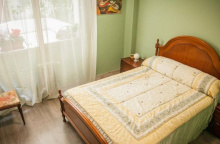
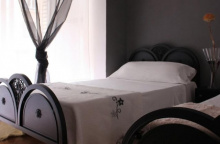
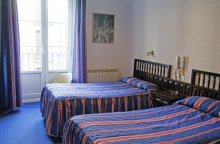
Multiple albergues operate in the old city. Hotels and pensiones cover all price ranges. Full services: hospital, pharmacies, outdoor gear shops, supermarkets, bus and train station. The Pilgrim Office near the cathedral stamps credenciales.
Logroño seems perpetually festive. The two major celebrations are San Bernabé (June 11), commemorating the 1521 siege, and San Mateo (September 21), the wine harvest festival — the bigger of the two and, predictably, focused on wine.
Logroño owes its existence to the stone bridge over the Ebro, which for a long time was the only suitable crossing point on this wide river. The toll extracted from pilgrims and merchants funded the town's growth. Its position on the Ebro and on the frontier between kingdoms made it one of the most fought-over cities in northern Spain — El Cid destroyed it in 1092, and it changed hands repeatedly between Navarra and Castile.
The 1521 siege of Logroño by French and Navarrese forces produced an unexpected legacy: a young Basque soldier named Iñigo López de Loyola was wounded defending the city. During his long recovery, he underwent a spiritual conversion that led him to found the Society of Jesus — the Jesuits. Ignatius of Loyola's story began here.
Leaving Logroño requires navigating the city — plenty of arrows, but many are painted low on curbs and hard to spot before dawn. From the cathedral, head straight along Calle del Marqués de San Nicolás, pass through two roundabouts, and turn left at the third. The route crosses the western suburbs before reaching open country toward Navarrete.
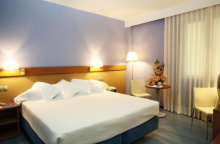
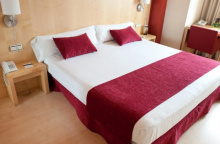
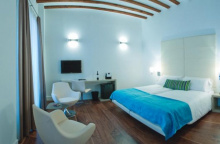
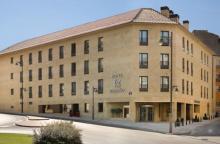
Accommodation in Logroño.
| Alaia Rooms Hostel 19€ 30 |
|
| Alaia Rooms Hostel 19€ 30 Booking.com |
|
| Albergue de Peregrinos Albas 16€ 26 Booking.com |

|
| Winederful Hostel & Café 21€ 18 Booking.com |

|
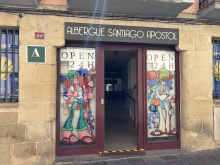
| Albergue Santiago Apóstol 12-20€ 76 Booking.com |
|
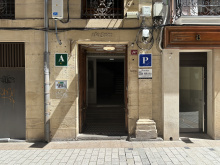
| Albergue Logroño 15€ 48 Booking.com |
|
| Albergue San Nicolás 22-25€ 28 Booking.com |

|
| Albergue Parroquial de Santiago Donativo€ 30 |
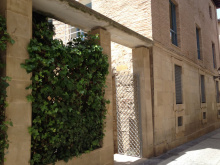
| Albergue de Peregrinos de Logroño 10€ 68 |
|
Comments