Burgos
Camino Frances
Burgos is the first city on the Camino Francés that genuinely demands a rest day — and earns it. Give yourself two nights if you can. There's too much here to rush through, and your body will thank you for the break before the meseta.
The Catedral de Burgos dominates everything. It's a UNESCO World Heritage Site in its own right — one of the great Gothic cathedrals of Europe, begun in 1221 and not completed until 1567. El Cid and his wife Doña Jimena are buried under the central transept. The 15th-century Capilla del Condestable and the starred vaulting of the dome are worth the price of entry alone. Don't miss the Papamoscas, a mechanical clock figure near the entrance that opens its mouth on the hour.
Beyond the cathedral, two monasteries on the outskirts deserve the walk. The Cartuja de Miraflores, about 3 km east of the center, is a working Carthusian monastery whose church contains Gil de Siloé's extraordinary retablo — nearly 100 square meters of carved and gilded wood, completed between 1496 and 1499. The royal tombs of Juan II and Isabel of Portugal, also by Siloé, are among the finest funerary sculptures in Spain. Entry is free.
The Monasterio de Santa María la Real de las Huelgas sits about 1.5 km west of the center. Founded in 1188 by Alfonso VIII and his wife Leonor of Aquitaine, it was a Cistercian nunnery of extraordinary power — its abbess held authority over more than fifty villages and could grant ordination licenses like a bishop. The Royal Pantheon contains Gothic tombs of Castilian royalty. A Moorish war banner captured at the Battle of Las Navas de Tolosa in 1212 is displayed during the annual Curpillos procession.
The Museo de la Evolución Humana houses the finds from Atapuerca and is one of the best museums in Spain — allow at least two hours. The Arco de Santa María, the main gate into the old city from the river, houses a free exhibition hall. The markings on the southern entrance to the Plaza Mayor show historical flood levels of the Arlanzón, with dates.
For eating, the Calle San Lorenzo off the Plaza Mayor has good tapas bars. The Plaza Huerto del Rey leans toward heavier Castilian fare. Burgos is famous for its morcilla — black pudding made with rice — and you'll find it everywhere.
Be wary of misleading signs at the far end of Burgos pointing toward Villalbilla. That town has been cut off from camino traffic by the construction of a rail line, and some efforts have been made to redirect pilgrims there by unofficial means. Follow the official yellow arrows.
The fiestas in Burgos run from solemn to spectacular. Semana Santa brings processions through the old city with cofradías carrying elaborate pasos. The Curpillos, celebrated on the Friday after Corpus Christi, is Burgos's most genuinely local festival — a tradition dating to at least 1331, tied to the Monasterio de las Huelgas and the Battle of Las Navas de Tolosa. The procession features Gigantones and Gigantillos (giant figures and their smaller counterparts), traditional dancers, and a military escort carrying a replica of the Navarrese banner. After the morning ceremonies, locals picnic at the Parral meadow near the monastery.
The Sampedros — the festivals of San Pedro and San Pablo around June 29 — are the summer blow-out: a full week of concerts, fireworks, parades, and food stalls. They've been Burgos's main summer fiesta since 1873, moved to late June to guarantee better weather.
San Lesmes, Burgos's patron saint, is celebrated on January 30 with a procession from the Town Hall to the church of San Lesmes, accompanied by the Gigantillos. The traditional San Lesmes rolls are sold by parish youth along the route.
Burgos was founded at the end of the 9th century as a military outpost to repopulate the northern plains during the Reconquista. Count Diego Rodríguez Porcelos established the settlement in 884, and within two centuries it had become one of Castilla's most important cities.
The cathedral tells that story. Bishop Mauricio and King Fernando III laid the first stone on July 20, 1221, in the French Gothic style. Construction continued for over three centuries, with major additions in the 15th and 16th centuries — the spires of the main facade, the Capilla del Condestable, and the dome over the transept, completed by Juan de Vallejo in 1567. UNESCO designated it a World Heritage Site in 1984.
Rodrigo Díaz de Vivar — El Cid — was born around 1043 in Vivar, about 10 km north of the city. Raised at the court of Fernando I, he rose to become Castilla's chief military commander before being banished by Alfonso VI for forcing the king to swear an oath of innocence in the death of his brother Sancho II. El Cid went east, carved out his own kingdom in Valencia, and became the most legendary warrior in Spanish history. His remains were moved to the cathedral transept in 1921, after a complicated journey that included theft by Napoleonic soldiers and eventual return from France.
The city's role didn't diminish in later centuries. Fernando and Isabel received Columbus here after his second voyage. And in the 20th century, Franco was proclaimed Generalísimo in Burgos in 1936, using it as his base of operations through the Civil War — a chapter the city doesn't dwell on but hasn't erased.
The road out of Burgos is mercifully shorter than the road in. Follow the river west through parkland before the camino turns south toward Tardajos.
This is where the meseta begins — Spain's vast central plateau, stretching ahead for the next 200-odd kilometers through the provinces of Burgos and Palencia. The terrain opens up into endless wheat fields, the sky grows enormous, and the horizons flatten to a thin line. The meseta has a reputation for being boring. It isn't. But it does demand a different kind of attention — to light, weather, the rhythm of your own walking, the subtle changes in a landscape that only reveals itself slowly.
The average elevation here sits around 800 m, and the weather can swing from scorching days to bitterly cold nights. Carry layers.
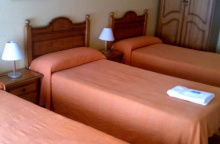
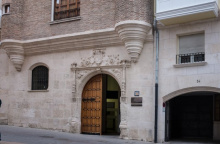
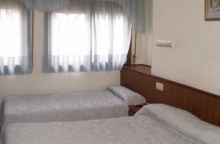
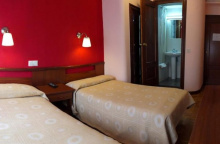
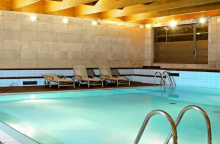
Accommodation in Burgos.
| Mola! Hostel Burgos 24*€ Booking.com |

|

| Casa del Cubo y de los Lerma 10€ 120 |
|
Comments