Zarautz has the longest beach in the Basque Country — 2.5 km of sand stretching the full length of town. In summer it fills with surfers; the consistent waves have drawn them since the 1960s, and several international competitions are held here annually. Outside surfing season, the beach is your promenade into and out of town.
The old quarter sits back from the waterfront. The Iglesia de Santa María la Real is a 15th-century Gothic church with an imposing bell tower 50 meters high — one of the town's oldest buildings. Adjacent is the Torre de los Zarautz, which serves as both bell tower and the Museum of Art and History. Inside the church, a tomb marks an unknown pilgrim who, realizing he was too ill to reach Santiago, requested burial here — a quiet reminder of the route's deeper history.
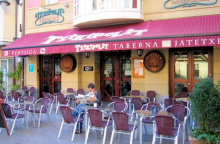
The beach palaces that once lined the promenade are gone, replaced by apartment blocks, but Zarautz retains its reputation as a food town. The surrounding hills produce txakoli, and the restaurants serve as a good introduction to the serious pintxo culture that intensifies as you continue west.
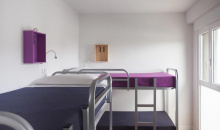
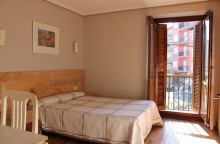
Zarautz is a popular event town and plays host to several surfing competitions and bike races throughout the summer. Both can put a crunch on the number of beds available.
January: San Sebastián on the 20th, as well as a few wine celebrations throughout the month. February: Santa Águeda, patroness of the Basque Country, on the 4th. The town also celebrates Carnaval. May: Santa Marina is celebrated on the 21st. June: San Pelayo from the 25th to the 27th. July: Santiago on the 25th. August: Santa Clara on the 12th, and La Virgen from the 14th to the 16th. September: Semana Vasca, or Basque Week, from the 1st to the 9th.
Zarautz was a whaling town long before it became a surf town. From the 13th to 16th centuries, its men hunted whales in the Bay of Biscay, processing oil, meat, and baleen that sustained the local economy. When the whales disappeared, the town turned to other fishing. In the 19th century, the bourgeoisie discovered the beach and built summer palaces along the promenade, establishing Zarautz as a resort — a role it still plays, now with wetsuits instead of parasols.
The marked way through Zarautz is along the Nafarroa Kalea, about two blocks from the waterfront and parallel to it. As an alternate, you can turn right towards the beach and follow it to the end of town.
Leaving Zarautz can be a confusing affair and the local information office doesn’t do much to clarify matters.
There are two options out of town:
Option 1: The Official Camino to upper Getaria - 5.2
The official camino through the hillside; this option also splits so read ahead to find out more. At the end of the beach or road turn left (south, away from the sea) onto San Inazio Kalea. Keep to the right-hand side and continue a short distance, keeping an eye out for the small road that ramps up to the right and nearly parallel to San Inazio. That road is the one you want, and it will take you upwards.
Near the top, there are signs for the Ermita de Santa Barbara (and an excellent view back east). Not far from the Ermita the camino leaves the road along a path to the right which offers views of the sea. A short distance down this trail the camino joins a different paved road and quickly arrives at a junction. At this point, you have the option of bypassing Getaria entirely. Keep straight for Getaria, or turn sharply left to follow the GR-121. This second option rejoins the first slightly beyond Askizu.
Option 2: The road to lower Getaria - 4.1
The alternate road route along the N-634 coastal road to Getaria. At the end of the Nafarroa Kalea or the end of the beach, turn right and follow the pedestrian path adjacent to the road as it hugs the coastline all the way to Getaria. Simple and straightforward.


Comments